The Project Desk
Colorado is one of the most hail-affected states in the country. The Front Range in particular sees major hail events most years, and many homeowners who stay in the area long enough will deal with at least one hail-related roof claim. This guide covers what to do, how the process works, and the mistakes that cost homeowners money.
How to know if you have hail damage
After a hail event, signs of damage can be subtle. A few things to look for from the ground:
- Damage to softer metal surfaces. Dented gutters, downspouts, AC condenser fins, metal vents, and flashing.
- Granule loss in gutters. A heavy concentration of shingle granules in your gutters after a storm suggests roof impact.
- Dings in window sills or trim. Hail that damaged trim is a strong sign the roof took hits too.
- Visible damage to siding or fences. Same principle — if siding shows hail damage, the roof did too.
From the roof itself (don’t climb up yourself — let a professional do this):
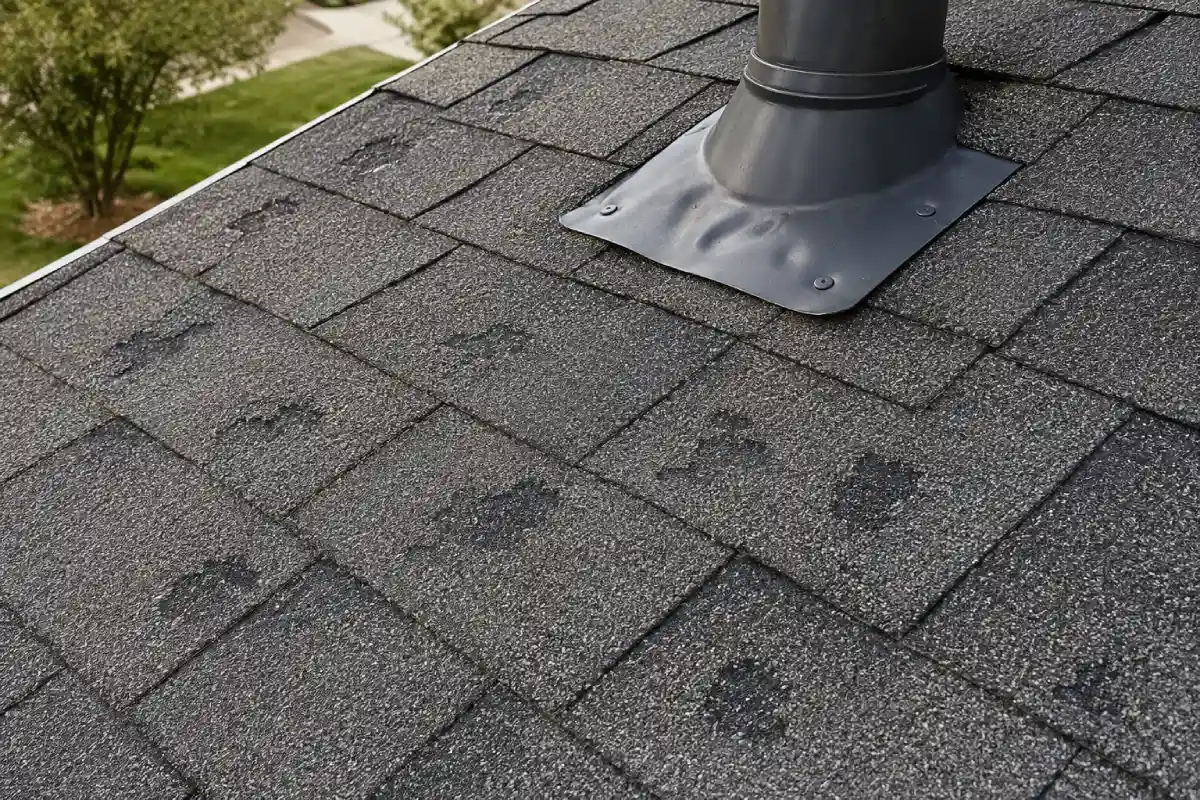
- Bruised shingles where granules have been knocked off down to the asphalt mat
- Cracked or split shingles
- Damage to shingle edges and corners
- Damage to ridge cap shingles
The most reliable indicator is a professional inspection. Most reputable Colorado roofing contractors offer free inspections, especially after major hail events.
When to file a claim
Generally, you should file a claim if:
- A reputable contractor confirms significant damage. Cosmetic damage that doesn’t compromise the roof’s function may not warrant a claim. Damage that does compromise function (cracking, granule loss exposing the mat, damaged flashing) typically does.
- The damage is widespread. A few bruised shingles isn’t usually claim-worthy. Damage across most of the roof typically is.
- You’re within your insurance policy’s reporting window. Most Colorado policies require claims to be reported within 1 year of the date of loss, though some are shorter. Don’t delay.
It’s reasonable to have a professional inspection first to decide whether a claim is warranted. Reputable contractors will tell you straight whether damage is significant enough to file.
How the insurance claim process works
Here’s the typical flow in Colorado:
Step 1: Initial inspection. A roofing contractor inspects your roof and documents damage with photos. This is usually free.
Step 2: File the claim. You contact your insurance company and report the loss. They’ll assign an adjuster and schedule an inspection.
Step 3: Adjuster inspection. The insurance adjuster inspects your roof, ideally with your contractor present. The adjuster writes an initial estimate of damages.
Step 4: Initial decision. Insurance either approves replacement, approves repair, or denies the claim. You’ll receive the initial scope and estimate from the insurance company.
Step 5: Supplements (if needed). If the initial estimate misses items — which is common, as adjusters often miss things or scope materials incorrectly — your contractor submits a supplement request to get those items added. This is normal and expected.
Step 6: Approval and work. Once the final scope is approved, work proceeds. Your contractor invoices the insurance company.
Step 7: Final payment. Most policies pay in two parts — Actual Cash Value (ACV) up front, then Recoverable Depreciation (RCV minus ACV) after the work is complete and documented. Your contractor can document completed work and provide the invoice your insurer needs to release the recoverable depreciation, but you are the one who submits that documentation to your insurance company. A roofing contractor may document damage, prepare a repair estimate, and discuss the repair scope with the insurer — but the contractor should not present itself as your public insurance adjuster or claim to represent you in adjusting the claim.
Understanding your policy
A few terms that matter:
Replacement Cost Value (RCV) vs. Actual Cash Value (ACV). RCV pays to replace the roof with materials of like kind and quality. ACV pays only the depreciated value — what the old roof was worth. Most modern policies are RCV, but check yours.
Deductible. You pay this out of pocket. In Colorado, many policies have a separate (and higher) wind/hail deductible — typically 1–2% of your home’s insured value. On a $500,000 insured home, that could be $5,000–$10,000.
Code upgrade coverage. Some policies include coverage for code-required upgrades (ice and water shield, ventilation, etc.) that may not have been on your original roof. Worth checking your policy.
Class 4 impact-resistant shingle discounts. Many Colorado insurers offer ongoing premium discounts (5–30%) for class 4 impact-resistant shingles. Often worth the modest upgrade cost during replacement.
The deductible scam
This is critical, so we’ll be direct: Colorado law prohibits roofing contractors from paying, waiving, or rebating your insurance deductible (C.R.S. § 10-4-110.8). Violations can carry serious legal consequences for the contractor.
If a contractor offers to “cover your deductible” or includes language in their contract suggesting they’ll absorb it, walk away. It’s a sign of a contractor who’s willing to commit fraud — and if they’re willing to commit fraud against your insurance company, they’re willing to do other things to you.
Legitimate contractors charge the full bid, you pay your deductible to your insurance company (not the contractor), and the insurance company pays the contractor the remainder.
How to avoid storm chasers
After major hail events, “storm chaser” contractors flood Colorado. These are out-of-state contractors who travel from event to event, often disappearing when warranty issues arise.
Signs of a storm chaser:
- Door-to-door solicitation after a storm
- Out-of-state license plates or addresses
- High-pressure sales tactics (“we need to start immediately”)
- Inability to provide local references
- No verifiable local presence or history in Colorado
- Offers to handle “everything” with the insurance company without you involved
- Pricing significantly below local market rates
Stick with established Colorado contractors who have a track record in your area, a verifiable local presence, and references you can actually call.
What to do if your claim is denied
If your initial claim is denied or partially approved, you have options:
- Request a re-inspection with your contractor present. Sometimes adjusters miss damage.
- File a supplement with documentation of additional damage.
- Request an appraisal under your policy’s appraisal clause if you can’t reach agreement on scope.
- Hire a public adjuster to negotiate on your behalf (they typically take a percentage of the recovered amount).
- In rare cases, legal action. A roofing attorney can be useful if you suspect bad faith claim handling.
Most claim disputes are resolved through supplement requests and re-inspections rather than escalation.
Bottom line
Hail damage roof claims in Colorado are common, and the process is well-established. The keys to a smooth claim:
- Document damage with photos as soon as you suspect it
- Get an inspection from a reputable local contractor
- File the claim with your insurance company promptly
- Have your contractor present for the adjuster inspection if possible
- Expect and request supplements if items are missed initially
- Avoid storm chasers and contractors offering to cover your deductible
- Understand your policy terms (RCV vs. ACV, deductible, code upgrades)
If you suspect hail damage and want a professional inspection from a vetted Colorado roofing specialist, we can connect you with one.